
A customer calls your business at 11pm on a Saturday. Nobody answers. They call your competitor. Your competitor’s Voice AI picks up instantly, qualifies the lead, books an appointment, and updates the CRM before your team even knows the call came in.
That scenario is not hypothetical. It is happening right now across every industry in the United States, and the businesses running Voice AI are capturing a compounding competitive advantage that late adopters will find increasingly difficult to close.
Voice AI is no longer experimental technology reserved for enterprise budgets. In 2026, the voice recognition market is estimated at $22.49 billion small businesses deploy production-ready Voice AI systems in hours without writing a single line of code, and 67% of Fortune 500 companies are running production Voice AI systems. This guide covers everything you need to understand Voice AI in 2026: what it is, how it works, which industries are using it, what it costs, and how to implement it in your business.
Voice AI is technology that enables computers to understand, process, and respond to human speech in real time. In a business context, Voice AI powers autonomous phone agents that hold natural conversations, qualify leads, book appointments, answer questions, and update CRM records without any human involvement.
Modern Voice AI operates through a three-stage pipeline:
Speech-to-Text (STT): The system captures spoken audio and converts it to text in real time. Modern STT models process speech with over 95 percent accuracy across multiple accents, background noise environments, and languages.
Large Language Model (LLM) Processing: The transcribed text is fed into an AI model that understands context, intent, and sentiment. The model generates an appropriate response based on the conversation history, business rules, and knowledge base it has been configured with.
Text-to-Speech (TTS): The generated response is converted back to natural-sounding audio using voice synthesis technology. In 2026, leading TTS engines produce voices indistinguishable from human speakers at normal conversation speeds.
The entire cycle from speech input to audio response completes in under 600 milliseconds on leading platforms, fast enough for natural conversation flow without awkward pauses.
Voice AI vs Traditional IVR: What Changed
Most businesses have experienced traditional IVR systems, the automated phone menus that say “Press 1 for sales, Press 2 for support.” Voice AI is a fundamentally different technology.
| Factor | Traditional IVR | Voice AI |
|---|---|---|
| Interaction model | Button presses, rigid menus | Natural two-way conversation |
| Understanding | Keyword matching only | Context, intent, and sentiment |
| Flexibility | Fixed script paths | Dynamic responses |
| CRM integration | Minimal | Real-time bidirectional sync |
| Appointment booking | Cannot book | Books directly into calendar |
| Escalation | Basic transfer | Intelligent context handoff |
| Setup time | Weeks to months | Hours to days |
| Cost per call | $7 to $12 (human agent) | $0.20 to $0.50 (AI agent) |
Per-call costs that used to range from $7 to $12 have been reduced to roughly $0.20 to $0.50 with Voice AI. For a company running 10,000 calls per month, labor costs of $70,000 to $120,000 are reduced to under $5,000, a 93 percent cut practically overnight.
How Voice AI Works in Real Business Scenarios
Understanding Voice AI in theory is one thing. Seeing how it operates in real business workflows makes the value immediately clear.
Scenario 1: Inbound Lead Qualification
A prospect sees a Facebook ad for a home renovation company and calls the number. It is 9pm. The Voice AI agent answers within one ring.
The agent introduces itself, asks about the project type, timeline, and rough budget. Based on the answers, it determines the lead is high-intent with a budget over $10,000. It offers three available slots for an in-person consultation, confirms the booking, sends an SMS confirmation, and updates the CRM with lead source, qualification data, and appointment details. The business owner sees the booked appointment in their calendar the next morning.
Total human involvement: zero.
Scenario 2: Appointment Reminders and No-Show Recovery
A dental practice runs 80 appointments per week. Their Voice AI agent calls every patient 24 hours before their appointment to confirm. Patients who confirm are tagged as confirmed in the CRM. Patients who do not answer receive an SMS reminder. Patients who cancel are immediately offered rebooking within the same call.
No-show rate dropped from 28 percent to 9 percent. Front desk staff freed from 3 hours of daily reminder calls.
Scenario 3: After-Hours Inbound Handling
An HVAC company receives 30 percent of its highest-value calls after business hours, homeowners with broken heating or cooling units who need emergency service. Previously those calls went to voicemail. Conversion rate from voicemail was under 10 percent.
With Voice AI handling after-hours calls, the agent collects the issue type, address, and urgency level, offers a service window, and books the job. Emergency calls trigger an immediate SMS to the on-call technician. Conversion rate from after-hours calls increased from 10 percent to 61 percent in the first 90 days.
Industries Using Voice AI in 2026
Voice AI adoption is not limited to large call centers. In 2026, it is producing measurable ROI across every service industry segment.
Healthcare and Medical Practices
Voice AI handles appointment scheduling, insurance verification questions, prescription refill requests, and post-visit follow-up calls.
Healthcare organizations are implementing Voice AI at scale, with the technology projected to save the US healthcare system billions in administrative costs.
Patient-facing Voice AI must comply with HIPAA requirements, which leading platforms now support natively.
Real Estate
Voice AI qualifies inbound leads from listing ads by asking about buyer or seller status, timeline, budget range, and location preferences. High-intent leads are routed to agents immediately. Low-intent leads enter automated nurture sequences. Agents only spend time on pre-qualified conversations.
Legal Services
Law firms use Voice AI to handle initial intake calls, collecting case type, incident date, and contact information before routing to the appropriate practice area. Intake volume increases without adding administrative staff.
Home Services
HVAC, plumbing, roofing, and electrical companies deploy Voice AI for after-hours emergency call handling, seasonal campaign outreach, and appointment booking. The after-hours use case alone produces the highest ROI in this segment given that emergency calls convert at significantly higher rates than standard inquiries.
Financial Services
78 percent of the top 50 banks have deployed production Voice AI agents for at least one customer-facing use case, up from 34 percent in 2024.
Applications include account balance inquiries, transaction verification, fraud alerts, and loan application pre-screening.
Marketing Agencies
Agencies deploy Voice AI inside GoHighLevel to handle inbound calls for their clients across multiple sub-accounts simultaneously. One agency running Voice AI across 15 client accounts effectively gives each client a 24/7 receptionist without adding headcount.
GoHighLevel Voice AI Agents Complete Setup Guide 2026
Voice AI Market Size and Growth in 2026
The numbers behind Voice AI adoption tell the story of a technology that has crossed from early adoption to mainstream infrastructure.
The global Voice AI agents market is valued at $2.4 billion in 2024 and projected to hit $47.5 billion by 2034, a 34.8 percent compound annual growth rate.
Voice AI funding surged eightfold to $2.1 billion in 2025, and 87.5 percent of builders are actively building voice agents in 2026, not just researching them.
Production voice agent implementations grew 340 percent year-over-year across 500 or more organizations, and 80 percent of businesses plan to integrate AI-driven voice technology into customer service by 2026.
Gartner forecasts conversational AI will cut contact center labor costs by $80 billion in 2026 alone.
These are not projections from pitch decks. They are from Gartner, Market.us, and production deployments running right now at scale.
Top Voice AI Platforms in 2026
The Voice AI platform landscape consolidated significantly in 2025 and 2026. Here are the leading options businesses are deploying today.
GoHighLevel Voice AI
Built natively into the GoHighLevel CRM platform, GHL Voice AI is the most accessible entry point for agencies and service businesses already on the GHL stack. It connects directly to your GHL calendar, pipeline, and contact records with no additional integration required.
Best for: Marketing agencies, service businesses, and GHL users who want Voice AI without managing separate platforms.
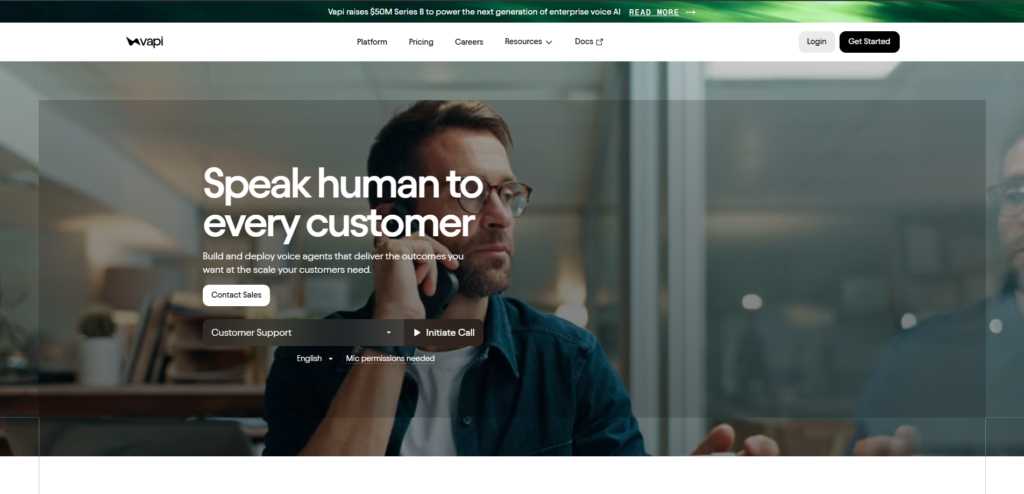
VAPI
VAPI is the leading developer-focused Voice AI infrastructure platform. It delivers the lowest latency in the market at approximately 536 milliseconds, supports any LLM backend, and gives developers full control over voice synthesis, conversation logic, and CRM integrations.
Best for: Technical teams building custom Voice AI deployments at scale.
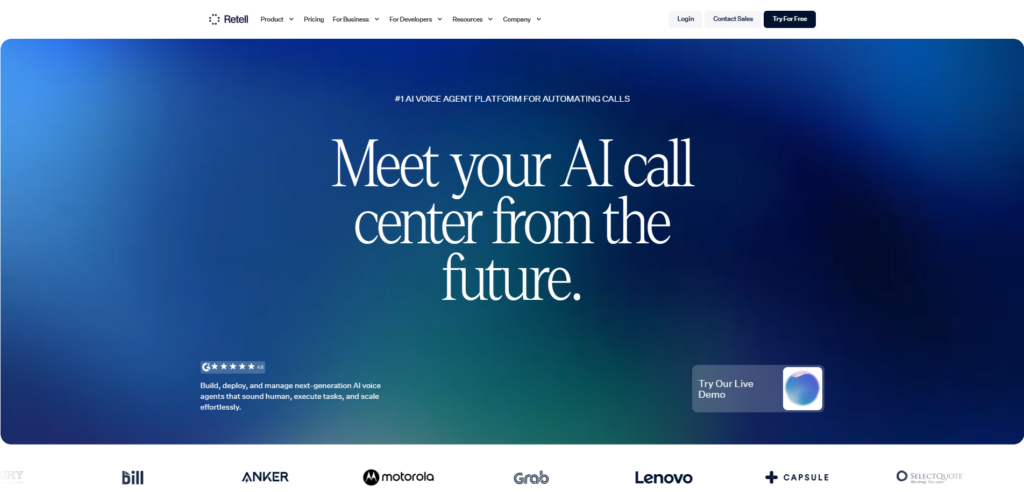
Retell AI
In January 2026, Retell expanded beyond voice to become the first solution enabling corporate call centers to deploy AI agents across voice, chat, email, and SMS, positioning itself as a complete IVR replacement for enterprise operations.
Best for: Contact centers and enterprises replacing legacy IVR systems.
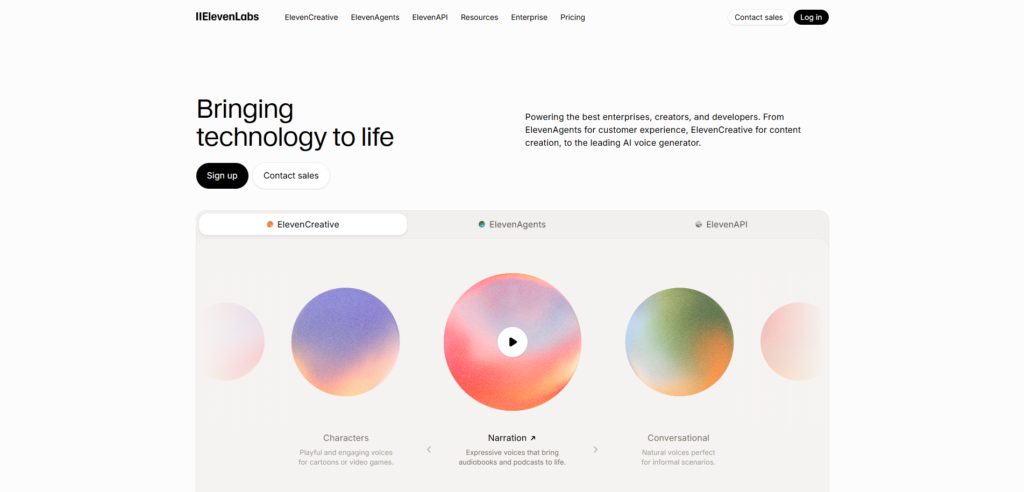
ElevenLabs
ElevenLabs focuses on voice synthesis quality rather than full agent infrastructure. Its voice models produce the most natural-sounding AI speech available, and its technology powers the voice layer of many other Voice AI platforms.
Best for: Businesses prioritizing voice quality in customer-facing applications.
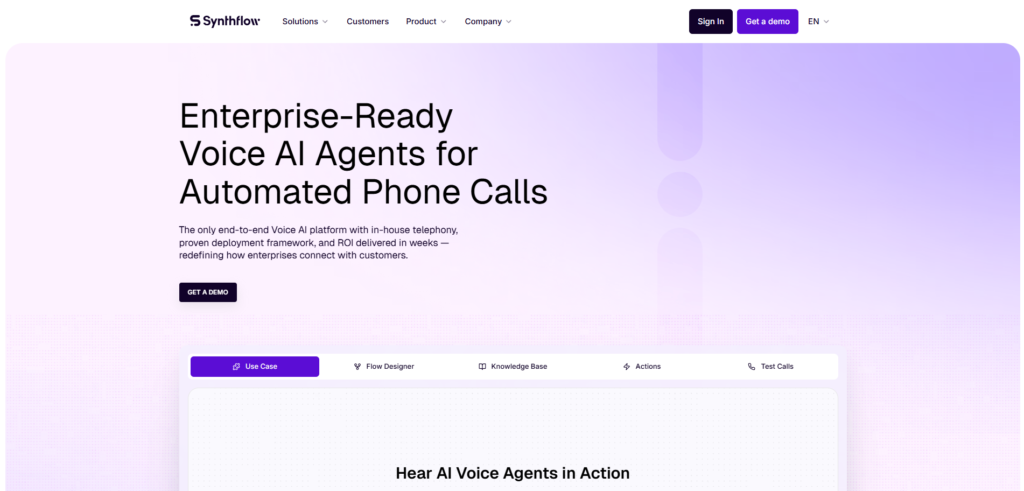
Synthflow
Synthflow provides a no-code Voice AI builder with native GoHighLevel integration. It trades some technical flexibility for speed of deployment, making it the fastest path to a live Voice AI agent for non-technical users.
Best for: Non-technical business owners who want a deployed Voice AI agent without developer involvement.
Voice AI Pricing: What It Actually Costs in 2026
Voice AI pricing varies significantly by platform and usage volume.
| Platform | Starting Cost | Per Minute Cost | Best For |
|---|---|---|---|
| GoHighLevel Native | $97/month per sub-account | $0.07 to $0.13 | GHL agencies |
| VAPI | Usage-based | $0.05 plus extras | Technical teams |
| Retell AI | Usage-based | $0.07 average | Contact centers |
| Synthflow | $100 plus per month | Included | Non-technical users |
| ElevenLabs | $5 per month | Per character | Voice synthesis only |
For a typical service business handling 200 inbound calls per month at an average of 3 minutes per call, total Voice AI costs range from $40 to $80 per month. Compare that to the cost of a full-time receptionist at $2,500 to $4,000 per month.
How to Implement Voice AI in Your Business
Implementing Voice AI does not require a developer, a large budget, or months of setup time. Here is the fastest path to a live Voice AI agent for a service business in 2026.
Step 1: Define Your Use Case
Start with the highest-value use case first. For most service businesses, that is either inbound lead qualification or after-hours call handling. Pick one. Get it working. Expand from there.
Step 2: Choose Your Platform
If you are already on GoHighLevel, start with native GHL Voice AI. If you are not on GHL, Synthflow offers the fastest non-technical deployment path. If you have developer resources and need custom control, use VAPI.
Step 3: Write Your Agent Prompt
The agent’s behavior is entirely defined by its system prompt. A strong prompt includes the agent’s name and role, the business it represents, its primary goal for the call, guardrails on what it should and should not discuss, and escalation triggers for transferring to a human.
Step 4: Build Your Knowledge Base
Upload your FAQs, service descriptions, pricing information if appropriate, and any other information the agent needs to answer questions accurately. Without a knowledge base, the agent will hallucinate answers to questions it does not have information for.
Step 5: Connect Your Calendar
Link the Voice AI agent to your booking calendar so it can offer real availability and confirm appointments during the call without double bookings.
Step 6: Test Thoroughly
Run a minimum of 20 test calls covering every scenario your real callers will use before going live. Fix prompt gaps, adjust conversation flow, and verify calendar bookings are creating correctly in your CRM.
Step 7: Go Live and Monitor
Activate the agent on your business phone number. Review call recordings and analytics in the first two weeks. Refine the prompt based on real call patterns.
GoHighLevel Automation Workflows Every Agency Must Build in 2026
Voice AI Limitations to Know Before Deploying
Voice AI in 2026 is powerful but not unlimited. Understanding the current limitations prevents deployment mistakes.
Complex emotional situations: Voice AI handles transactional and informational conversations well. Highly emotional or sensitive conversations, complaints, bereavement, or crisis situations should always escalate to a human agent immediately. Configure your escalation triggers accordingly.
Highly technical or niche expertise: If a caller asks a question outside the agent’s knowledge base, it will either hallucinate an answer or produce a generic response. Build a comprehensive knowledge base before going live and configure the agent to escalate rather than guess on complex technical questions.
Accents and audio quality: While Voice AI accuracy has improved dramatically, heavy accents combined with poor call audio quality still produce transcription errors. Leading platforms handle standard US accents with over 95 percent accuracy. Non-standard accents may require additional configuration.
Legal compliance in regulated industries: Healthcare, financial services, and legal applications require specific compliance configurations. HIPAA-compliant Voice AI is available but requires intentional setup. Do not deploy Voice AI in regulated industries without confirming compliance requirements with your platform provider.
FAQ
Q: What is Voice AI in simple terms?
A: Voice AI is technology that allows a computer to hold a real phone conversation with a human. It listens to what the caller says, understands the meaning behind the words, generates an appropriate response, and speaks that response back in a natural-sounding voice. For businesses, it functions as an automated phone agent that can qualify leads, book appointments, and answer questions without any human involvement.
Q: Is Voice AI the same as a chatbot?
A: No. A chatbot handles text-based conversations through a website or messaging app. Voice AI handles spoken phone conversations. The underlying AI technology is similar but the interaction channel, real-time processing requirements, and latency constraints are fundamentally different. Voice AI must respond in under one second to maintain natural conversation flow. Chatbots have much more tolerance for response delay.
Q: Can callers tell they are talking to Voice AI?
A: In 2026, with leading voice synthesis technology, most callers cannot identify the voice as AI during standard business conversations. Voice AI agents are required to disclose being an AI when directly asked. For most business applications, caller awareness of the AI nature does not significantly impact conversion rates.
Q: How much does Voice AI cost for a small business?
A: For a small business handling 100 to 300 calls per month, expect to spend $40 to $150 per month on Voice AI depending on the platform and call duration. This compares to $2,500 to $4,000 per month for a full-time human receptionist performing the same function.
Q: What industries benefit most from Voice AI?
A: Healthcare practices, real estate agencies, home services companies, legal intake departments, and marketing agencies see the highest ROI from Voice AI deployments. Any business that relies on inbound phone calls for lead qualification or appointment booking is a strong candidate for Voice AI implementation.
Q: Does Voice AI work with GoHighLevel?
A: Yes. GoHighLevel has native Voice AI built into its AI Employee suite. It connects directly to GHL calendars, pipelines, and contact records. Agencies can deploy Voice AI across multiple client sub-accounts, giving each client an automated inbound call handler without managing separate platforms.
The Business Case for Voice AI in 2026
One B2B SaaS company documented cutting lead response time from 47 hours to 9 minutes after deploying a Voice AI qualification agent. That is not a marginal improvement. That is a different competitive reality.
The businesses deploying Voice AI in 2026 are not just cutting costs. They are building a compounding operational advantage. Every missed call their competitors fail to answer is a lead their Voice AI captures. Every after-hours inquiry that used to go to voicemail now converts at the same rate as business-hours calls.
Voice AI is not a future technology. It is production infrastructure available right now, at costs that make it accessible for businesses of every size. The question is not whether your industry will adopt it. The question is whether you will be among the businesses leading that adoption or catching up to it.
Explore more Voice AI guides, GoHighLevel tutorials, and automation strategies at makeJUMP Articles, covering everything service businesses and agencies need to build systems that scale in 2026.

Jaber Rayhan has 6+ years of hands-on experience creating marketing systems, sales pipelines, and automation workflows for service businesses in the USA, UK, Europe and the Middle East, as a CRM automation specialist and GoHighLevel expert. He is a CRM Expert and Manager at Sales Compass where he creates and implements end-to-end GHL automation solutions for real clients, such as CRM architecture, funnel design, appointment workflows, and lead qualification systems. He is also the founder of makeJUMP, a digital agency that specializes in CRM automation and GoHighLevel builds. All makeJUMP Articles are based on first-hand experience with implementation, not just research.