
Most small business owners searching for AI agents in 2026 are hit with two things: overhyped marketing claiming AI will replace your entire team, and enterprise-grade tools priced for companies with 500 employees and a dedicated IT department.
Neither is useful if you run a 1 to 10 person operation trying to stop leads from falling through the cracks, reduce the hours spent on repetitive tasks, and build systems that work while you sleep.
This guide cuts through both problems. It covers what AI agents for small business actually are in 2026, which use cases consistently deliver real ROI, which platforms non-technical owners can actually deploy, what the honest limitations are, and exactly where to start if you have never deployed an AI agent before.
Table of Contents
What AI Agents for Small Business Actually Are in 2026
An AI agent is not a chatbot. That distinction matters more than most explainer articles acknowledge.

A chatbot responds to questions inside a chat window. It waits for input, generates text, and stops there. An AI agent has tools, a goal, and the autonomy to execute multi-step actions on your behalf across multiple systems without waiting for instruction at each step.
The shift is subtle but important: instead of building processes step by step, you are assigning outcomes. Say someone fills out a form on your website at 11:48pm. In a typical setup, that lead sits there until morning. With an agent, the flow is different. It reads the submission, decides if the person is worth prioritizing, sends a tailored reply, and logs the interaction in your CRM before you wake up. Simular
That is the practical difference. A chatbot describes how to follow up with a lead. An AI agent follows up with the lead.
Agentic AI differs from standard generative AI in one critical way: autonomy. Rather than simply responding to prompts, an AI agent can observe triggers, make decisions within defined parameters, and execute actions across multiple systems without constant human input. Gohighlevel
In 2026, small business AI agents operate across four categories:
Customer-facing agents: Handle inbound calls, website chat, SMS, and email inquiries in real time, 24 hours a day. These are the highest-ROI category for most service businesses.
Sales and lead agents: Qualify incoming leads, send personalized outreach, update CRM records, and schedule follow-up sequences without manual input.
Operations agents: Automate internal workflows including scheduling, invoice follow-up, task assignment, data entry, and reporting.
Content and marketing agents: Draft emails, social posts, and marketing copy based on templates and brand guidelines, reducing content production time significantly.
The Real State of AI Agent Adoption in 2026
According to March 2026 data from the SBE Council, the average small business now uses a median of five AI tools, with most owners planning to add more throughout the year. The most common use cases include general business research, marketing and content creation, customer service, sales support, administrative automation, and financial management forecasting. Gohighlevel

94 percent of small businesses that implemented AI agents in 2026 saw operational costs drop by at least 30 percent within the first quarter. Small businesses automating customer support report saving $2,000 to $10,000 per month in labor costs. Voiceai
Small businesses that deploy AI agent systems cut operational costs by 35 to 45 percent within 90 days, reflecting real labor savings, not theoretical projections. Gohighlevel
These numbers reflect a genuine shift. AI agents for small business are no longer experimental. They are production infrastructure that non-technical owners are deploying and profiting from right now.
The conversation around AI agent adoption has shifted dramatically. In 2026, we are no longer asking whether autonomous tools belong in a small business toolkit. The question now is which implementations deliver measurable results, and which ones drain budget without return. Gohighlevel
What Actually Works: The 5 Highest-ROI Use Cases
Not every AI agent use case delivers equal results for small businesses. These five consistently produce measurable ROI within the first 30 days of deployment.
Use Case 1: Inbound Lead Response and Qualification
This is the single highest-ROI application for most service businesses. The math is simple: responding to a lead within 5 minutes makes you 100 times more likely to connect with them compared to responding within 30 minutes. Manual follow-up cannot achieve that consistently. AI agents can.
Customer-facing automation remains one of the strongest use cases. AI agents that handle incoming calls, website chat, text messages, email, and social media direct messages in real time are now reliable enough to operate around the clock. Gohighlevel
For service businesses using GoHighLevel, the platform’s native Conversation AI and Voice AI agents handle this use case without requiring any additional tool. For businesses not on GHL, Lindy AI and Tidio both deliver reliable inbound lead handling at accessible price points.
What to automate first: Inbound form submissions to instant SMS response, basic qualification questions, and calendar booking link delivery. This alone recovers the majority of leads that previously went cold overnight.
Use Case 2: Appointment Booking and Reminder Automation
Manual appointment management is one of the most time-consuming administrative tasks in service businesses. AI agents eliminate it entirely.
A well-configured booking agent handles inbound inquiries, checks real availability, offers appointment slots, confirms bookings, sends preparation reminders, and follows up after no-shows without any front desk involvement.
Multi-channel AI agents integrated with CRM and automated follow-up can launch in 7 to 10 days with the right implementation partner. Gohighlevel
For GoHighLevel users, the native calendar automation combined with Voice AI covers this use case entirely. For non-GHL users, Lindy AI connects to Google Calendar and handles scheduling conversations through email and SMS.
Realistic result: No-show rates drop 15 to 25 percentage points. Front desk time spent on scheduling drops by 60 to 80 percent.
Use Case 3: After-Hours Inbound Call Handling
AI agents evolved from chatbots into autonomous digital workers capable of browsing the web, writing code, sending emails, managing workflows, and making decisions without human intervention. Gartner projects the AI market to hit $2.52 trillion in 2026, with agentic AI at the center. Voiceai
For service businesses where a significant percentage of high-value inquiries arrive after business hours, Voice AI is the most impactful agent to deploy.
A caller who contacts your business at 9pm either gets an AI agent that qualifies them and books a consultation, or gets voicemail. Conversion rates from voicemail are under 10 percent. Conversion rates from a properly configured Voice AI agent run 40 to 65 percent for service businesses with clear value propositions.
GoHighLevel’s native Voice AI is the most accessible entry point. VAPI offers lower latency for high-volume deployments. Synthflow is the fastest no-code setup for non-technical owners.
Use Case 4: Invoice and Payment Follow-Up
Late payments are a persistent problem for service businesses. Manual invoice chasing is uncomfortable and time-consuming. AI agents handle it systematically without the awkwardness.
A payment follow-up agent sends invoice reminders on a defined schedule, escalates overdue communications with progressively firmer messaging, creates tasks for personal outreach at defined thresholds, and stops automatically when payment is received.
The 2026 Atradius Payment Practices Barometer found that 68 percent of SMBs that adopted an AI agent for finance operations did not lay anyone off. They redeployed the freed hours to higher-value work like sales and strategy. Softr
Make.com combined with your CRM and payment processor handles this workflow without requiring any dedicated AI agent tool. For businesses wanting a purpose-built solution, Agensio’s recovery agent is built specifically for this use case.
Use Case 5: CRM Data Entry and Pipeline Management
Every hour your team spends manually updating CRM records, moving deals between pipeline stages, and logging contact activity is an hour not spent on revenue-generating work.
AI agents automate the entire CRM maintenance workflow: new form submissions create contacts automatically, call transcripts populate contact notes, email replies update pipeline stages, and deal values are logged without manual entry.
A six-person content agency was spending close to three hours every day on follow-up emails, CRM updates, and scheduling before any actual client work even started. After deploying AI agents for these workflows, those three hours were recovered daily. Voiceai
GoHighLevel handles this natively for agencies and service businesses. For businesses on HubSpot, Salesforce, or other CRMs, Make.com or Zapier build the automation bridge between your forms, calls, and CRM records.
GoHighLevel Automation Workflows Every Agency Must Build in 2026
Best AI Agent Platforms for Small Business in 2026
The best AI agents for small business share three traits: they cover multiple workflows without forcing you to buy four different tools, they integrate with tools small businesses already use including Gmail, Slack, HubSpot, Notion, and Shopify, and they deliver value within weeks, not months. Voiceai
GoHighLevel (Best for Service Businesses and Agencies)
GoHighLevel is the most complete AI agent stack for service businesses in 2026 because it combines Voice AI, Conversation AI, workflow automation, CRM, and appointment booking in one platform. You are not assembling an agent stack from separate tools. The agents are built into the CRM you are already using.
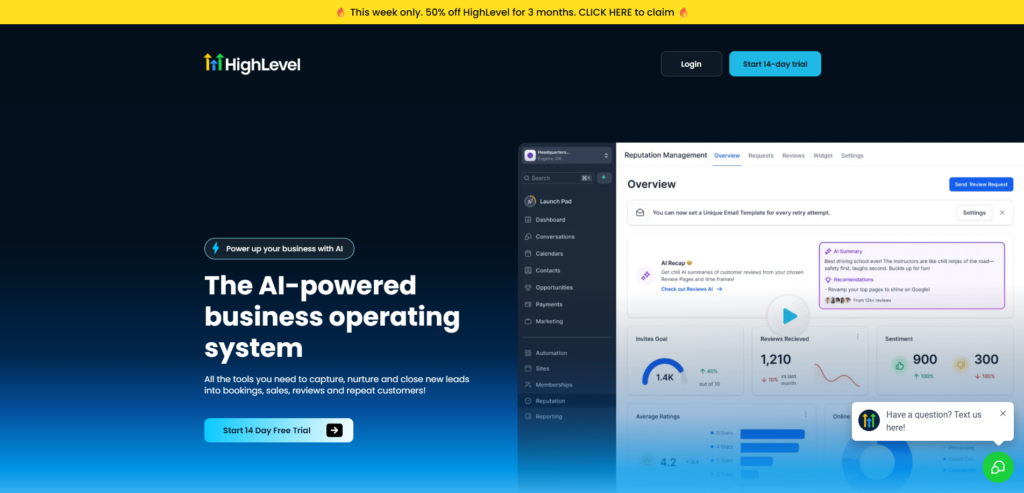
Best for: Home services, MedSpas, real estate, legal intake, coaching businesses, and marketing agencies managing client accounts.
Starting cost: $97 per month for the platform, plus $97 per month per sub-account for AI Employee (Voice AI and Conversation AI).
Lindy AI (Best No-Code Agent Builder for General Use)
Lindy AI strikes the perfect balance between power and simplicity. You describe what you want in plain English and it builds workflows that actually work. What sets Lindy apart is its reliability. You can have a working agent handling customer inquiries within 30 minutes of signing up. Leadlock
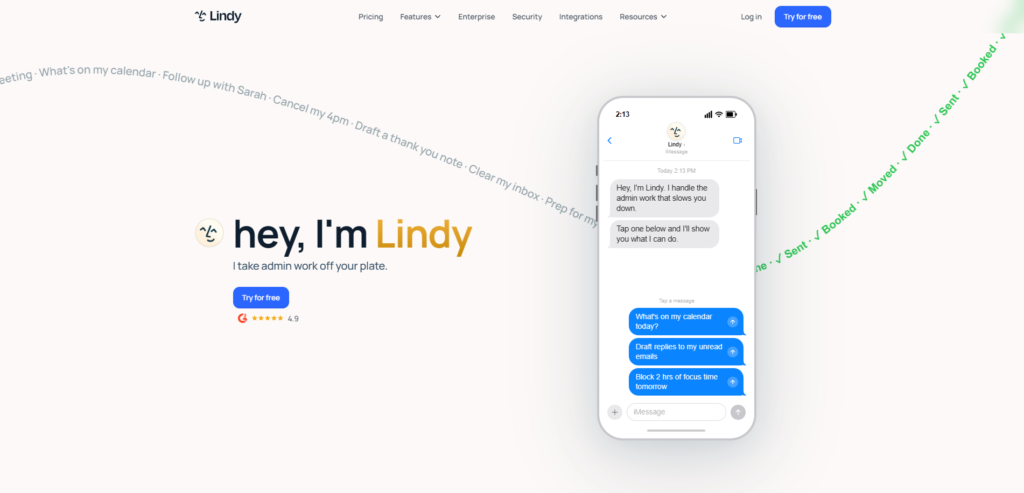
Lindy positions itself as a team of AI assistants rather than a workflow tool. It is designed for building agents that handle day-to-day tasks like meeting prep, email management, and scheduling. Multi-agent collaboration works well: one agent qualifies leads, another sends follow-ups, and a third updates the CRM, all coordinated automatically. Gohighlevel
Best for: Solo founders and small teams who want AI assistants for personal and business workflow automation without technical setup.
Starting cost: $49.99 per month for the Plus plan with full agent functionality.
Make.com (Best for Building Custom Agent Workflows)
Make.com is not an AI agent platform in the traditional sense. It is a visual automation builder that lets you assemble AI agent behavior by connecting triggers, AI modules, and actions across 3,000 plus apps.
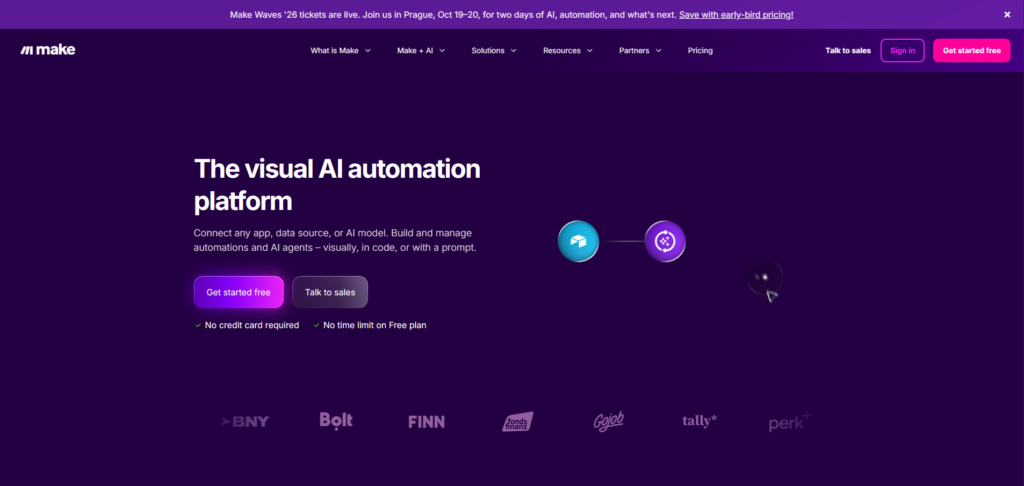
For small businesses that need custom logic, like routing leads to different sequences based on qualification answers or scoring inbound inquiries using an AI model before CRM entry, Make.com delivers that flexibility at a significantly lower cost than dedicated agent platforms.
Best for: Businesses with specific workflow requirements that off-the-shelf agent tools do not cover, and anyone already using Make.com for other automations.
Starting cost: $9 per month for the Core plan with 10,000 credits.
Relevance AI (Best for Custom AI Agent Workflows Without Code)
Relevance AI’s visual builder lets you chain together different AI models, APIs, and business logic without coding. At $19 per month, it costs significantly less than enterprise alternatives while offering similar functionality. The learning curve is steeper than simpler tools but the flexibility makes it worthwhile for businesses with unique processes. Leadlock
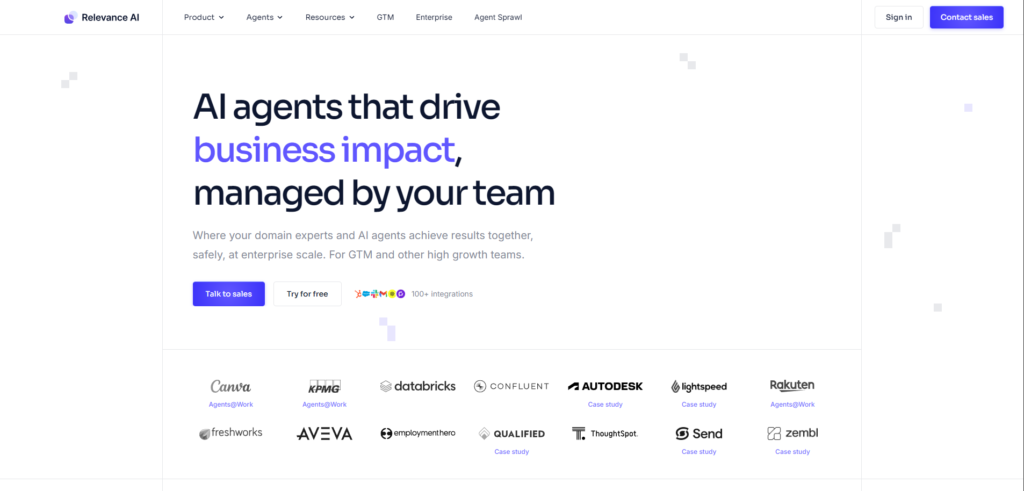
Best for: Businesses that need custom multi-step AI workflows and have basic technical comfort with no-code tools.
Starting cost: $19 per month.
Zapier (Best for Simple Two-Step Automations)
Zapier is free for up to 100 tasks per month, which is enough to test a handful of simple automations before committing. The Professional plan costs $29.99 per month and offers multi-step Zaps, premium apps, and webhooks. That is where most small businesses doing real automation work will land. Voiceai
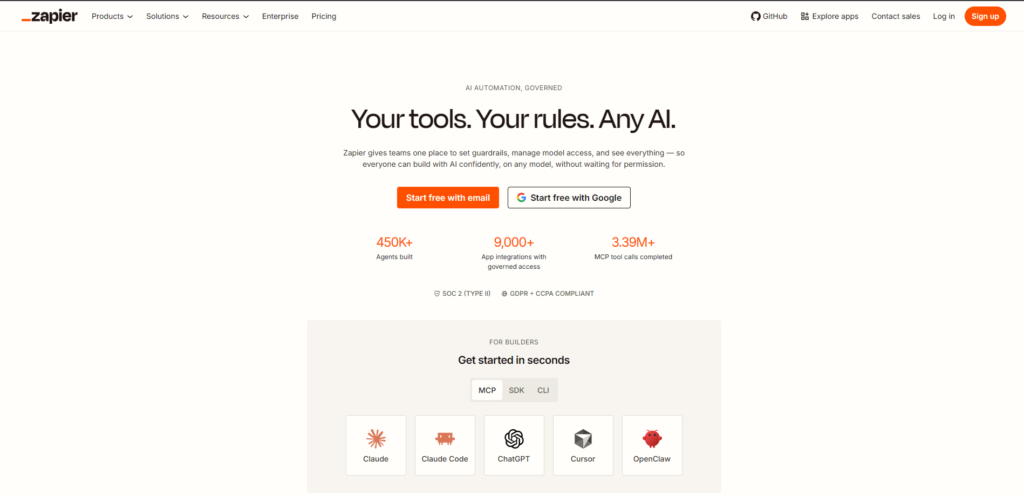
Best for: Simple trigger-action automations connecting existing tools, small businesses taking their first step into automation before investing in more capable platforms.
Starting cost: Free for basic use. $19.99 per month for the Starter plan.
AI Agent Platform Comparison for Small Business
| Platform | Starting Price | No-Code | Voice AI | CRM Built-in | Best For |
|---|---|---|---|---|---|
| GoHighLevel | $97/month | Yes | Yes | Yes | Service businesses, agencies |
| Lindy AI | $49.99/month | Yes | No | No | General workflow automation |
| Make.com | $9/month | Yes | No | No | Custom multi-step workflows |
| Relevance AI | $19/month | Yes | No | No | Custom agent building |
| Zapier | $19.99/month | Yes | No | No | Simple automations |
Make.com GoHighLevel Integration Complete Guide 2026
What Does Not Work: Honest Limitations
The most significant risk in 2026 remains the over-promise of generalist AI agents that claim to replace multiple roles simultaneously. Without clearly defined task boundaries, these tools produce inconsistent results, miss contextual nuances, and create more work through error correction than they save. Gohighlevel
Fully autonomous customer service without escalation paths: AI agents handle routine, transactional conversations reliably. Complex complaints, nuanced objections, and emotionally charged situations still require human judgment. Build clear escalation triggers into every customer-facing agent before going live.
Generic content generation at volume: Publishing AI-generated content without differentiation or editorial oversight is producing diminishing returns in 2026. As AI-assisted search becomes the norm, content originality and authority are rewarded. Small businesses using AI agents for marketing must focus on quality and brand voice rather than volume alone. Gohighlevel
Agents without system access: An agent that cannot access your existing systems is little more than a chat interface. The critical requirement for practical AI agents is end-to-end action capability. If your AI cannot update records, trigger processes, or communicate across platforms, the workflow remains manual. Gohighlevel
Complex multi-role replacement from day one: Start with one clearly defined task. Get one agent working reliably. Measure the result. Then expand. Businesses that try to deploy five agents simultaneously across different workflows before any single one is proven consistently lose more time to configuration and error correction than they save.
How to Start With AI Agents for Small Business: A Practical Framework
Success depends more on proper configuration than tool selection. Standardize your workflows before expecting agents to handle them. Voiceai
Step 1: Identify your biggest manual time drain. Write down every task you or your team repeat more than three times per week. Circle the ones that follow a predictable pattern with clear inputs and outputs. Those are your agent candidates.
Step 2: Pick one task to automate first. Do not try to automate everything at once. Pick the single highest-value repetitive task and build one agent for it. For most service businesses, that is inbound lead response.
Step 3: Choose the right platform for that specific task. Match the tool to the job. For inbound calls: GoHighLevel Voice AI or Synthflow. For email and scheduling workflows: Lindy AI. For custom multi-step logic: Make.com. For simple trigger-action automation: Zapier.
Step 4: Define the agent’s boundaries clearly. Every AI agent needs a clear scope: what it handles, what it does not handle, and exactly when it escalates to a human. Vague scope produces inconsistent behavior.
Step 5: Test with real scenarios before going live. Run 20 or more real test interactions covering the most common and the most edge-case scenarios your agent will face. Fix what breaks in testing, not in front of real customers.
Step 6: Measure results after 30 days. Track the specific metric the agent was deployed to improve: response time, no-show rate, CRM data accuracy, or hours saved per week. If the number moved in the right direction, expand. If not, diagnose before adding more agents.
FAQ
Q: What are AI agents for small business?
A: AI agents for small business are autonomous software systems that can perceive triggers, make decisions, and execute multi-step actions across multiple tools without waiting for human instruction at each step. Unlike basic automation tools that follow rigid rules, AI agents reason through context and adapt their actions based on the specific situation. Common applications include inbound lead response, appointment booking, after-hours call handling, and CRM data management.
Q: How much do AI agents cost for small businesses?
A: Costs vary significantly by platform and use case. Simple workflow automation through Make.com or Zapier starts at $9 to $20 per month. General-purpose AI agents like Lindy AI start at $49.99 per month. An all-in-one platform like GoHighLevel with Voice AI costs $97 to $194 per month plus usage fees. For most small service businesses, a realistic budget for a production AI agent stack is $100 to $300 per month.
Q: Do I need technical skills to deploy AI agents for my small business?
A: For most modern AI agent platforms in 2026, no. Platforms like Lindy AI, GoHighLevel, and Synthflow are genuinely no-code. You configure agents through plain-language prompts and visual interfaces without writing code. Make.com and Relevance AI require basic comfort with workflow logic but no programming knowledge. Developer-focused platforms like VAPI and n8n require technical skills but offer more customization.
Q: What is the best AI agent for a small service business?
A: For most small service businesses in the US in 2026, GoHighLevel’s AI Employee suite (Voice AI and Conversation AI) delivers the highest ROI because it integrates directly with your CRM, calendar, and pipeline without requiring additional tool connections. For businesses not on GoHighLevel, Lindy AI is the most accessible starting point for general workflow automation.
Q: Can AI agents replace employees in a small business?
A: AI agents reliably replace specific repetitive tasks, not roles. The realistic outcome for most small businesses is that AI agents handle the repetitive, time-consuming work within a role, freeing the person in that role to focus on higher-value activities. Most businesses report redeploying staff to better work rather than eliminating positions.
Q: What is the fastest AI agent to deploy for a small business?
A: GoHighLevel’s missed call text-back agent can be configured and live in under 30 minutes for businesses already on the platform. For non-GHL users, Lindy AI delivers a working email or scheduling agent within an hour of signing up. The fastest deployments are always the most narrowly defined: one trigger, one action, one outcome.
Final Thoughts: Where to Start With AI Agents for Small Business
The small businesses building durable competitive advantages in 2026 are not the ones with the most AI tools and AI Agents. They are the ones who picked one high-value task, built one reliable AI agent, measured the result, and expanded from a proven foundation.
The superior model for small business AI deployment is automation for the routine with seamless handoff for the complex. That principle, applied consistently, produces real operational leverage without the instability that comes from deploying half-configured agents across too many workflows simultaneously. Gohighlevel
Start with your inbound lead response. If you miss leads after hours, that is your first agent. Build it, test it, measure it. Then decide what to automate next.
Explore more AI agent guides, GoHighLevel automation strategies, and CRM system breakdowns at makeJUMP Articles, covering the practical systems that help small businesses and agencies operate more efficiently in 2026.

Jaber Rayhan has 6+ years of hands-on experience creating marketing systems, sales pipelines, and automation workflows for service businesses in the USA, UK, Europe and the Middle East, as a CRM automation specialist and GoHighLevel expert. He is a CRM Expert and Manager at Sales Compass where he creates and implements end-to-end GHL automation solutions for real clients, such as CRM architecture, funnel design, appointment workflows, and lead qualification systems. He is also the founder of makeJUMP, a digital agency that specializes in CRM automation and GoHighLevel builds. All makeJUMP Articles are based on first-hand experience with implementation, not just research.